
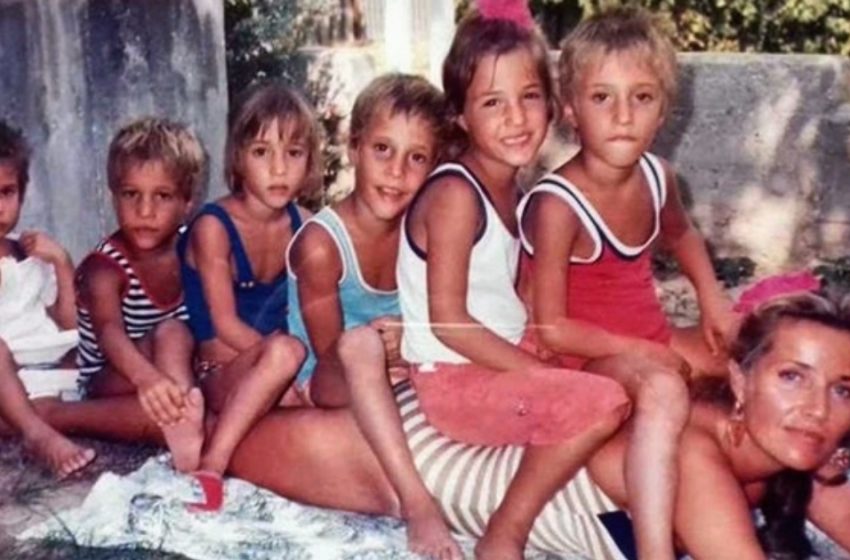
In 1980, Europe witnessed an extraordinary event: the birth of the Giannini sextuplets in Florence, Italy. Franco and Rosanna Giannini, both 29-year-old schoolteachers, welcomed six children—four boys, Fabrizio, Francesco, Giorgio, and Roberto, and two girls, Letizia and Linda. Born at 35 weeks and 6 days, their weights ranged from 1,200 to 1,750 grams. Their arrival marked only the second recorded set of sextuplets worldwide and the first in Europe, instantly making them international news. The family quickly became celebrities, with magazines and media closely following their lives for years.

Rosanna’s multiple pregnancy was medically assisted with hormone therapy, and she spent the final eight months hospitalized to ensure her safety and that of her babies. The media frenzy was overwhelming: gifts and donations poured in from companies and officials, while journalists competed for exclusive stories. Although some critics accused the Gianninis of exploiting their children’s fame, the family explained that raising six infants at once was a massive logistical and financial challenge, with all received funds directed toward their care.
As the sextuplets grew, the challenges persisted. Health issues arose, including Francesco needing a kidney transplant, while public scrutiny remained intense. Nevertheless, Franco and Rosanna focused on providing a stable home and strong education. All six children completed school, and four went on to university, funded entirely by their parents. Even when some adult children faced unemployment and lived at home, the family stayed close-knit, supporting one another.

Over time, the Gianninis withdrew from the public eye, especially following negative press in the 1990s. They occasionally engaged with journalists for milestone birthdays but often guarded their privacy. By 2015, Rosanna had returned to teaching and secured a pension, allowing her to continue supporting her children. The sextuplets pursued diverse careers: Giorgio works in an office, Letizia and Linda became literature teachers, Fabrizio earned a pedagogical degree, and Roberto works in food services. Francesco, meanwhile, continued to face ongoing health challenges from earlier complications.


By 2022, the Giannini sextuplets had reached 42 years of age. Only Letizia, Linda, and Fabrizio had children, each giving their parents one grandchild, while the others remained without offspring. Despite the trials, public attention, and health struggles, the family remained united, cherishing their rare bond. Rosanna expressed a wistful hope to one day see a “soccer team” of grandchildren, reflecting both the pride and challenges of raising Europe’s first surviving sextuplets.


