
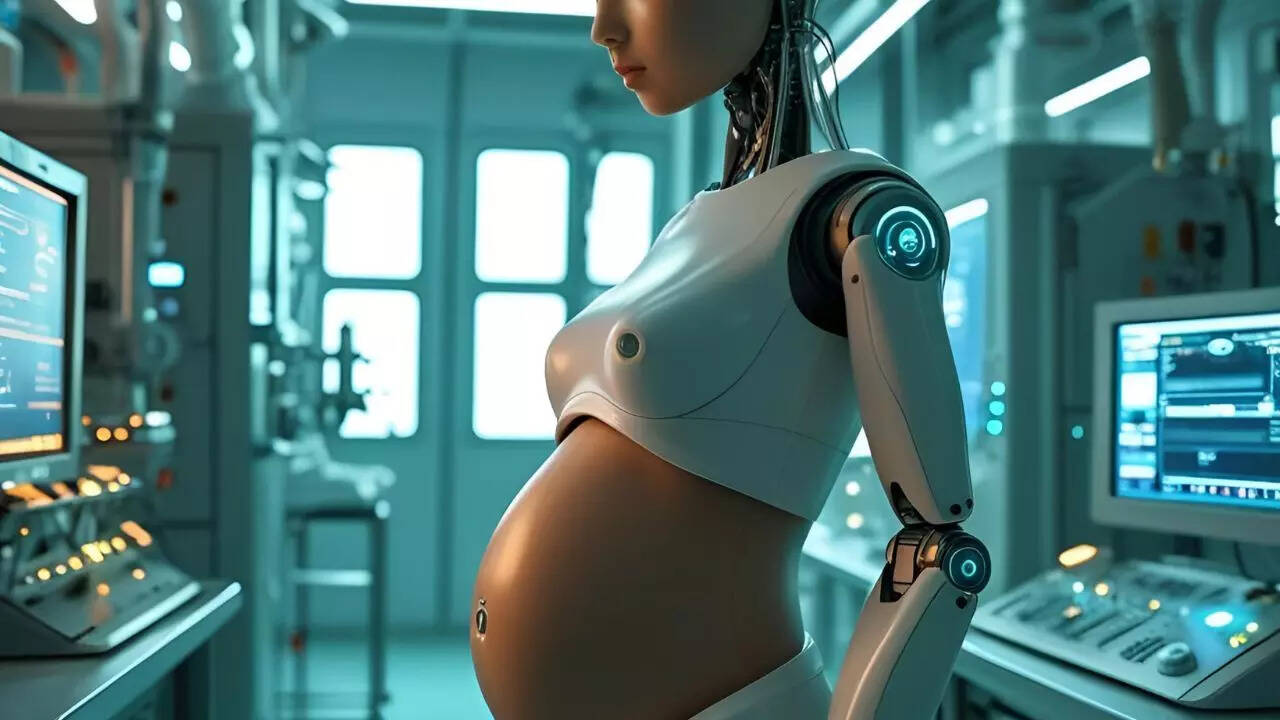
A Chinese company is planning to create the world’s first humanoid robot capable of pregnancy using an artificial womb. The innovation utilizes artificial amniotic fluid and nutrient delivery via a tube, replicating natural pregnancy, and will now be integrated into humanoid robots.
Kaiwa Technology, based in Guangzhou, is preparing to develop what could be the first-ever “pregnancy robot.” The concept involves a humanoid robot with an artificial womb embedded in its abdominal cavity, designed to carry a fetus for the full ten months of pregnancy and deliver a baby.

The robot is set to debut in 2026, with its price expected to drop to around 100,000 yuan (approximately $14,000 USD). The goal is to provide an alternative to traditional pregnancy for those who wish to avoid the physical challenges of human gestation.

The bold vision of a humanoid robot for surrogate pregnancy was presented at the 2025 World Robot Conference in Beijing by Zhang Zifeng, founder of Kaiwa Technology and a partner at Nanyang Technological University. According to Zhang, this is not merely an incubator, but a life-size humanoid equipped with an artificial womb in the abdomen, capable of replicating the entire process from conception to birth.
The core innovation lies in the artificial womb technology, where the fetus develops in artificial amniotic fluid and receives nutrients through a tube, simulating natural pregnancy. Dr. Zhang claims that the technology has already been tested in laboratory conditions and now requires integration into a humanoid form to allow real human-robot interaction during pregnancy.
Currently, artificial wombs function more as incubators for newborns, sustaining life only after partial gestation. For Dr. Zhang’s concept to work, the technology must be refined to support fertilization, implantation, and full-term pregnancy. He did not disclose further details, leaving questions about the scientific, ethical, and legal challenges it may face.


