

Standing just 112 centimeters tall—barely over three and a half feet—Kenny Baker’s stature was modest, and his wife was only slightly taller. Yet from the outside, many saw only their height and the medical labels attached to it. Doctors cautioned them early on that life, especially raising a family, might be fraught with challenges.
There were uncertainties, warnings, and quiet doubts spoken in clinical tones. But none of that could overshadow love, determination, or the drive to live a meaningful life. Kenny Baker’s story proves that true impact is never measured in centimeters.
Born on August 24, 1934, in Birmingham, England, Kenny grew up in a working-class family at a time when differences were rarely understood. Diagnosed with a form of dwarfism, his physical stature would be small, but his ambitions were anything but. In an era with few accommodations, Baker quickly learned that adaptability, confidence, and humor were essential tools for navigating life.
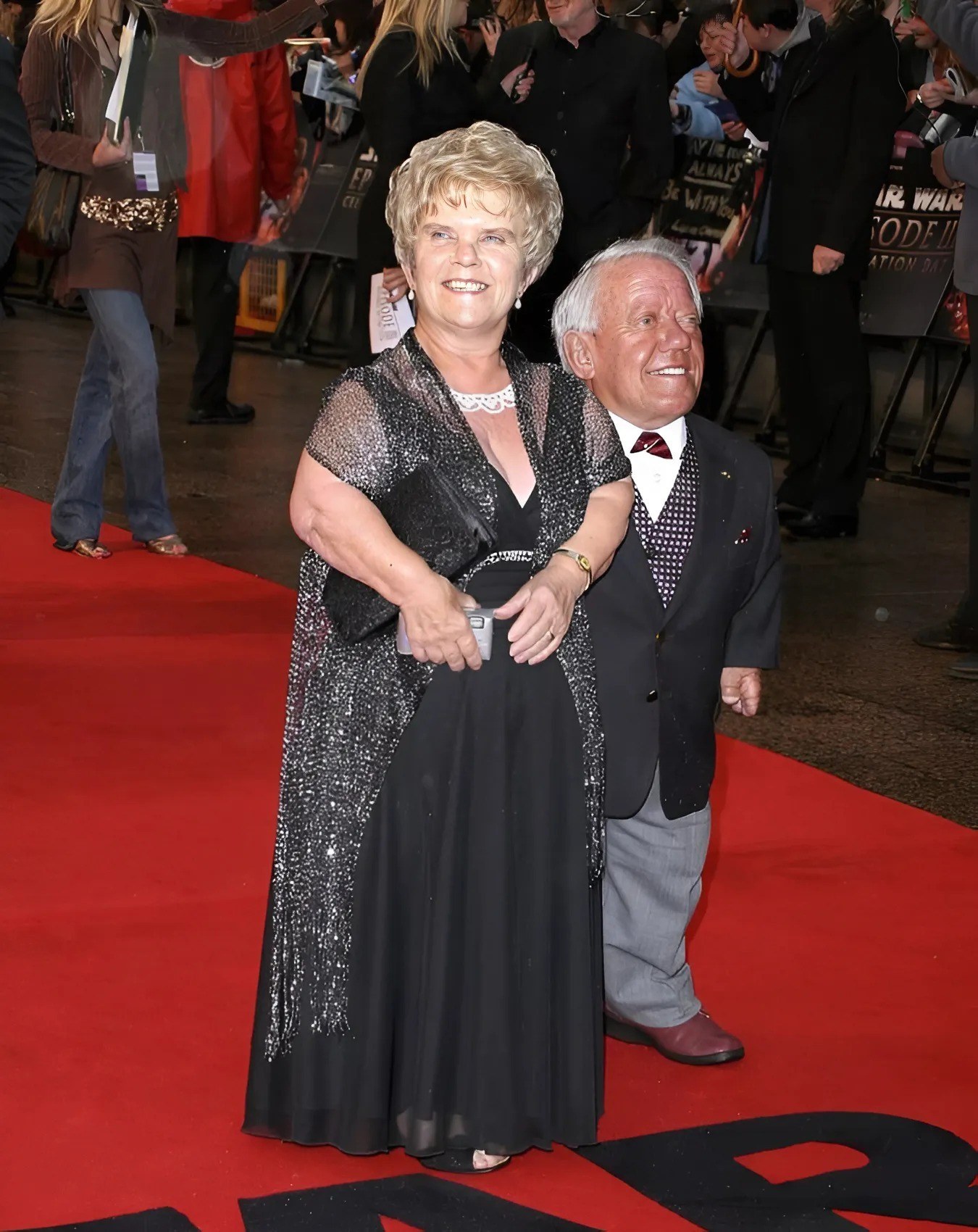
Long before he became a cinematic icon, Kenny found his calling on the stage. As a teenager and young adult, he performed in circuses, carnivals, and traveling shows—rigorous environments demanding stamina, precision, and a strong connection with audiences. Those early years, though far from glamorous, were formative. They taught him discipline, timing, spatial awareness, and the ability to turn perceived limitations into professional strengths.
These skills later proved invaluable when he transitioned to film and television. Throughout the 1960s and 1970s, Baker appeared in various musical and fantasy productions, but nothing prepared him for the role that would define his career.
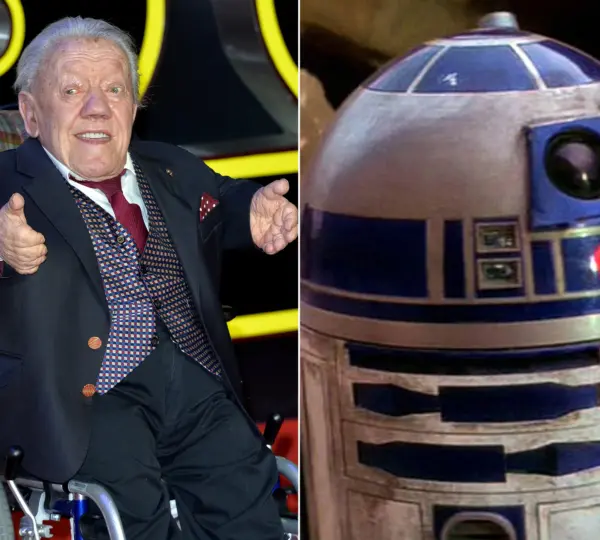
In 1976, he stepped into the confined, beeping shell of R2-D2 for Star Wars: A New Hope. On paper, the character was little more than a concept—a small droid with no dialogue, no visible face, and limited mobility. But Baker’s skill and experience brought R2-D2 to life. Inside a heavy, claustrophobic costume, he conveyed emotion—curiosity, humor, loyalty—through subtle movements alone. The droid became instantly beloved, a character defined as much by Baker’s performance as by design or sound.
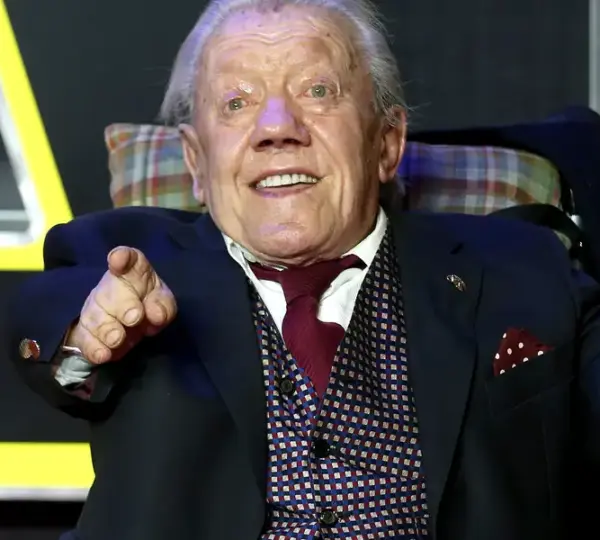
Despite the fame that followed, Kenny never let success overshadow his personal life. He married Eileen Baker, a woman who shared not only his stature but also his grounded outlook. Together, they built a life founded on mutual understanding, patience, and resilience.
Medical warnings loomed when they decided to start a family, cautioning about genetic risks and complications. Yet Kenny and Eileen pressed forward quietly, motivated by love rather than expectation. They welcomed two sons, both of average height, proving that life’s outcomes cannot always be predicted. Their family life remained private, defined by everyday routines rather than public attention.
Tragedy struck in 1993 when Eileen passed away at just 43 after a long illness. Kenny withdrew further from the public eye, carrying her memory with quiet dignity. Those who met him described a man of warmth, humility, and genuine kindness—qualities that endured long after his screen performances.
Kenny Baker passed away on August 13, 2016, at 81. Tributes poured in from around the world, honoring not only the unforgettable R2-D2 but also the integrity, perseverance, and humanity he demonstrated throughout his life.
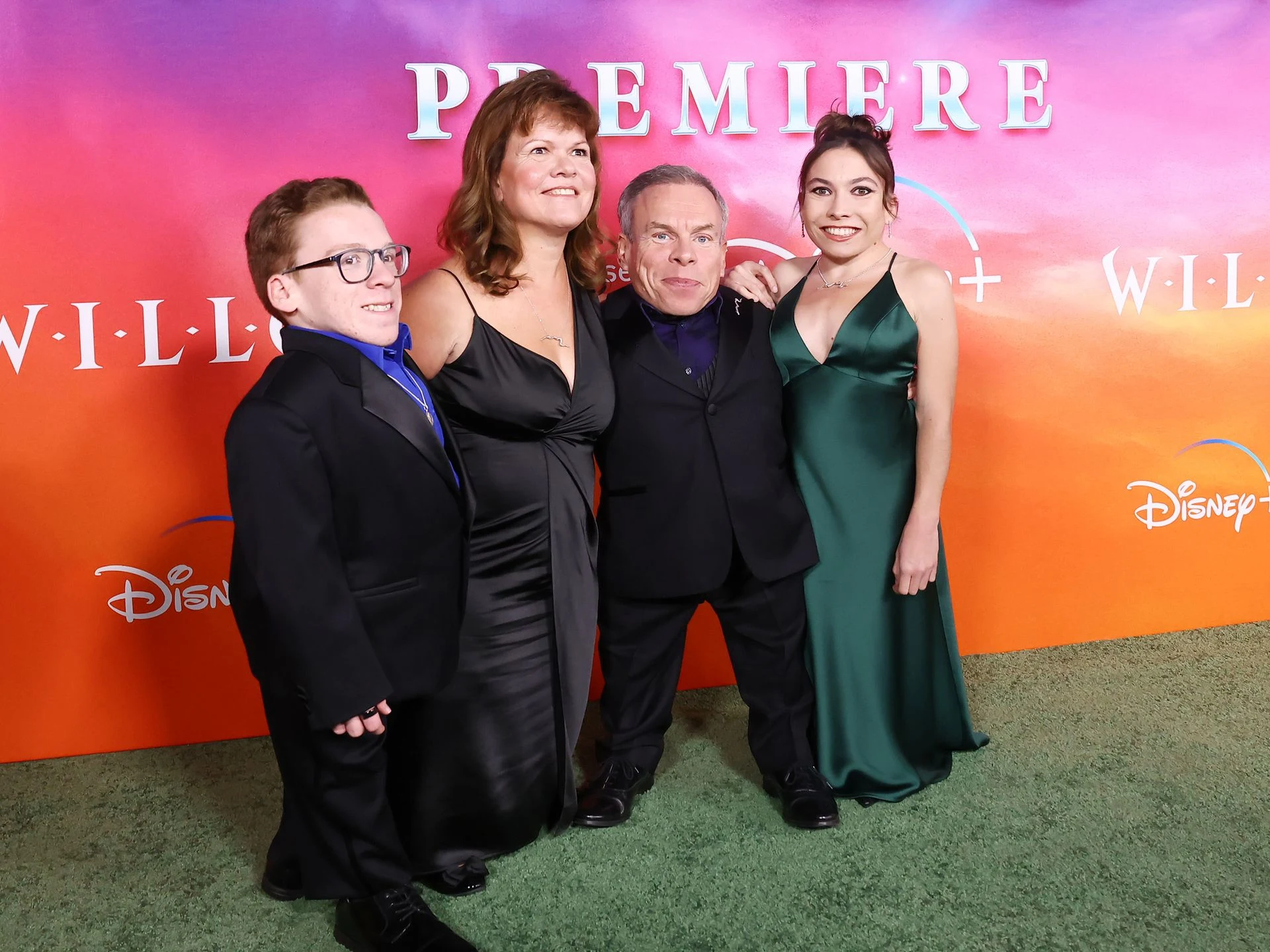
His story resonates universally. It is a testament that true value is not measured by size, expression does not require words, and love can thrive even amidst doubt and loss. Kenny Baker’s legacy reminds us that the most meaningful lives are often defined not by spectacle, but by consistency, care, and unwavering integrity.
In a world obsessed with appearances, he showed that strength, talent, and humanity often flourish where least expected.


