
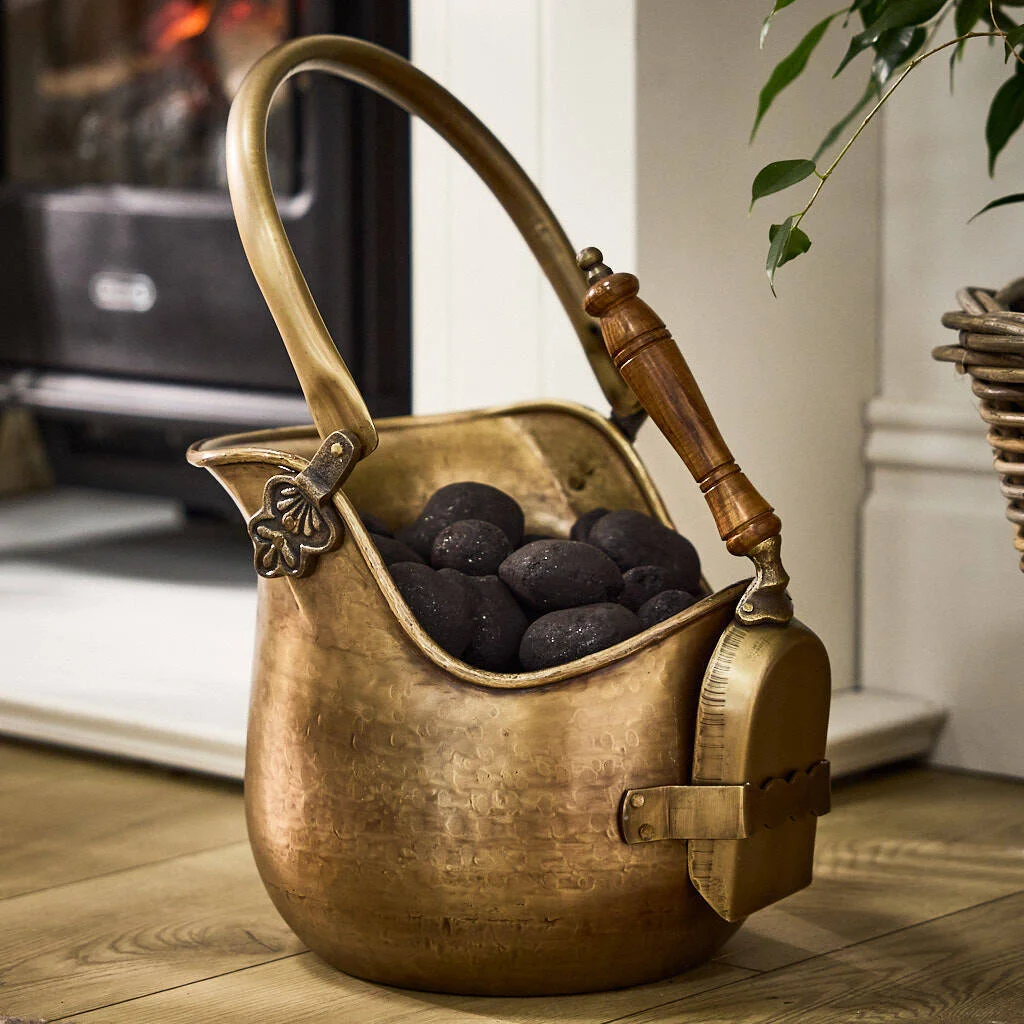
The Forgotten Household Treasure That Once Sat Beside Every Fireplace 🔥🏡
If you’ve ever wandered through an antique shop and spotted a sturdy metal container with a wide mouth and solid handle, you may have paused and wondered, “What on earth was this for?” At first glance, it seems familiar, yet distant—like a whisper from the past. Long ago, this object sat quietly in the coziest corners of homes—next to crackling fires, by brick hearths, or near coal-burning stoves. Today, it’s a rarity, often overlooked and misunderstood.
Let’s step back in time to rediscover a humble household item that once played a vital role in everyday life.
A Quiet Icon of the Hearth: What Was This Object?
Before modern heating, families depended on coal and wood to keep warm. This object, known as a coal scuttle or ash bucket, was nearly as important as the fire itself. From the late 1700s through the mid-1900s, nearly every home had one. Though simple in design, it was a practical tool shaped by the needs of hearth-centered living.
More than just a container, it symbolized warmth, comfort, and the rhythm of a slower, more intentional life. Each winter evening, someone would carry this bucket to fill the stove or clear ashes, keeping the heart of the home glowing.

Clever Design for Function and Durability
A coal scuttle might look basic, even rugged, but its design was brilliant:
-
Durable construction: Typically iron or galvanized steel, able to withstand heat.
-
Wide, flared opening: Made scooping coal and pouring ashes easy and mess-free.
-
Reinforced sides: Vertical ridges added strength, preventing warping.
-
Top and side handles: One for carrying, another for tipping coal or ashes smoothly.
-
Stable base: Prevented tipping on uneven floors.
Built to endure, it aged alongside the families that relied on it.
The Daily Ritual of Firekeeping
Tending the fire wasn’t just a chore—it was a daily ritual. The coal scuttle was central to this practice. Each morning, someone scooped fresh coal into the stove or fireplace, coaxing new flames to life. Each evening, the bucket collected embers and ashes, keeping floors clean and the hearth safe.
This simple bucket made the difference between a warm, inviting home and a smoky, ash-strewn room.
A Household Staple Before Central Heating
Coal scuttles were everywhere—from English cottages to American Victorian homes. Whether in a grand parlor or a modest kitchen, the same trusty metal bucket waited patiently by the fire.
They were indispensable from the late 18th century until the mid-20th century, when central heating, radiators, and electric furnaces made them obsolete. Once essential, coal scuttles became relics, admired for their durability and design but no longer needed.
Where You Can Find Them Today
While they’ve vanished from daily use, coal scuttles haven’t disappeared entirely. They now appear in:
-
Antique stores and markets
-
Historic homes and museums
-
Farmhouses and cottages with working fireplaces
-
Vintage-inspired interiors
Many are repurposed as plant holders, umbrella stands, or rustic décor pieces. Their weathered metal and classic lines bring charm and history to modern spaces.
A Nostalgic Reminder of Warmer Days
Objects like this hold memories of family life, cold mornings, and quiet evenings by the fire. A coal scuttle isn’t just a metal bucket—it’s a vessel of stories, glowing embers, and shared moments.
It reminds us of a world where warmth wasn’t switched on with a button, but earned through care and ritual.
Conclusion
The old coal scuttle is more than a forgotten household tool—it’s a piece of living history. Once a silent companion to every fireplace, it kept homes warm, safe, and tidy. Today, even as a decorative item, it carries the memory of craftsmanship, patience, and the comforting glow of a well-tended fire.
In its quiet way, it reminds us what home used to mean: warmth, tradition, and the simple beauty of everyday life. 🔥🏠


