

Before becoming one of country music’s most authentic and raw voices, Jelly Roll—born Jason DeFord in Antioch, Tennessee—led a life marked by struggle, addiction, and repeated incarceration. By age 14, he had already faced arrests, and over the years, he spent time behind bars roughly 40 times for drug-related and violent offenses. Open about his battles with substances like cocaine, Xanax, and cough syrup, he has credited a life-changing moment with becoming a father while in prison for sparking his journey toward hope. As he recalls:
“I had to learn that you could drink alcohol without doing cocaine… For a long time, I assumed drinking always meant doing cocaine.”
Music became his lifeline—writing, rapping, and singing offered him a glimpse of a life he felt he didn’t deserve. He told American Songwriter: “Music gave me hope when I didn’t think I’d ever deserve any.” Fast forward to 2025, and Jelly Roll stands not only as a Grammy-nominated, award-winning artist but as a symbol of redemption, authenticity, and storytelling from the heart.

“The Field of Grace”: A Sanctuary for Healing
Jelly Roll has revealed his next chapter: transforming the Tennessee land tied to his past into a recovery center for mental health and addiction, aptly named The Field of Grace. “I believe in the healing power of music,” he says, “but I want to do more than sing about it—I want to help people live through it.”
The vision for the center includes:
-
Professional therapy and mental health support
-
Creative recovery programs, including a recording studio for storytelling through music
-
Community support groups and partnerships with local charities and healthcare providers
-
A safe haven for those seeking a second chance, built on land that now symbolizes hope
The idea came from reflection on his own life:
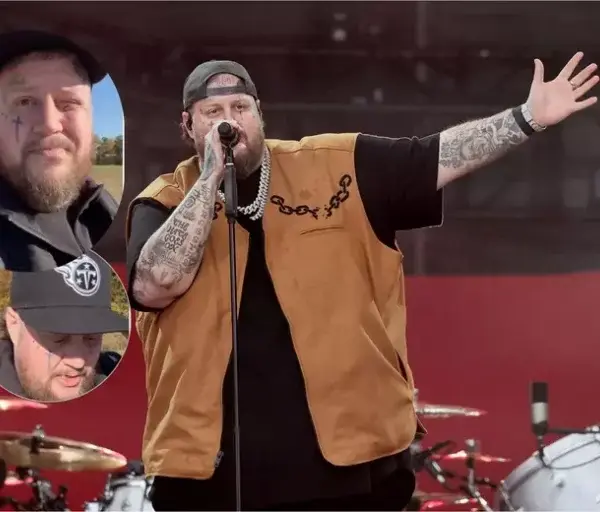
“I looked around and realized—this land changed my life. Now it’s time it changes somebody else’s.”
Together with his wife, Bunnie Xo, he purchased over 500 acres in Tennessee, combining personal sanctuary with a vision for giving back. Jelly Roll stresses that this effort isn’t about charity alone—it’s about accountability, redemption, and transformation.
“You don’t forget the faces of the people you left behind,” he says. “The ones who didn’t make it out.”
Faith, Family, and Second Chances
Jelly Roll credits his wife and fans for guiding him toward purpose and resilience. Through songs like Save Me and Need a Favor, he transforms personal struggles into relatable stories for millions.
“Sometimes, you don’t need a therapist first—you need a microphone.”
Rooted in faith and belief in second chances, his farm-sanctuary initiative embodies the same redemption that has defined his life and career.

Fans Hail It as His “True Legacy”
The announcement of The Field of Grace sparked a social media wave, with hashtags like #JellyRollHeals and #FieldOfGrace trending. Fans celebrated it as “the truest redemption story in country music.” One wrote, “He’s doing what most artists only sing about,” while another said, “He proves that no matter how lost you are, you can still come home.” Industry peers have also praised the initiative, recognizing it as a deeply personal mission, not just a side project.
Building Bridges, Not Headlines
Jelly Roll emphasizes this project is not about publicity. Funding it personally, he’s collaborating with counselors, therapists, and people with lived experience in recovery to make it a reality.
“If one kid doesn’t pick up a needle because of this, then every brick is worth it. You can’t teach compassion—but you can live it.”
His goal is to create a space where pain no longer dictates the final chapter.
From Bars to Bridges
In a poetic full-circle moment, the man who once sat behind prison bars now uses the “bars” in his songs—and soon the walls of his center—to build bridges of hope.
“I built a career on pain,” he says. “Now I’m building a place where pain doesn’t have the last word.”
For fans who’ve watched his rise, The Field of Grace isn’t just a success story—it’s a living testament that redemption is not a one-time achievement but a daily practice of giving, healing, and hope.


