
As a working mother with no family nearby, I needed help. Friends strongly recommended Anna—a calm, responsible student with first aid certification and training in early childhood education. On paper, she was perfect. And at first, everything did seem perfect.
But one day, fate showed me a different side. I returned home earlier than expected. The house was strangely silent. For two little kids, silence usually meant mischief, noise, or tears—but this silence was different. Heavy. Unsettling.
The living room was scattered with toys, the TV played an old cartoon, yet I heard no laughter, no chatter. Just quiet.
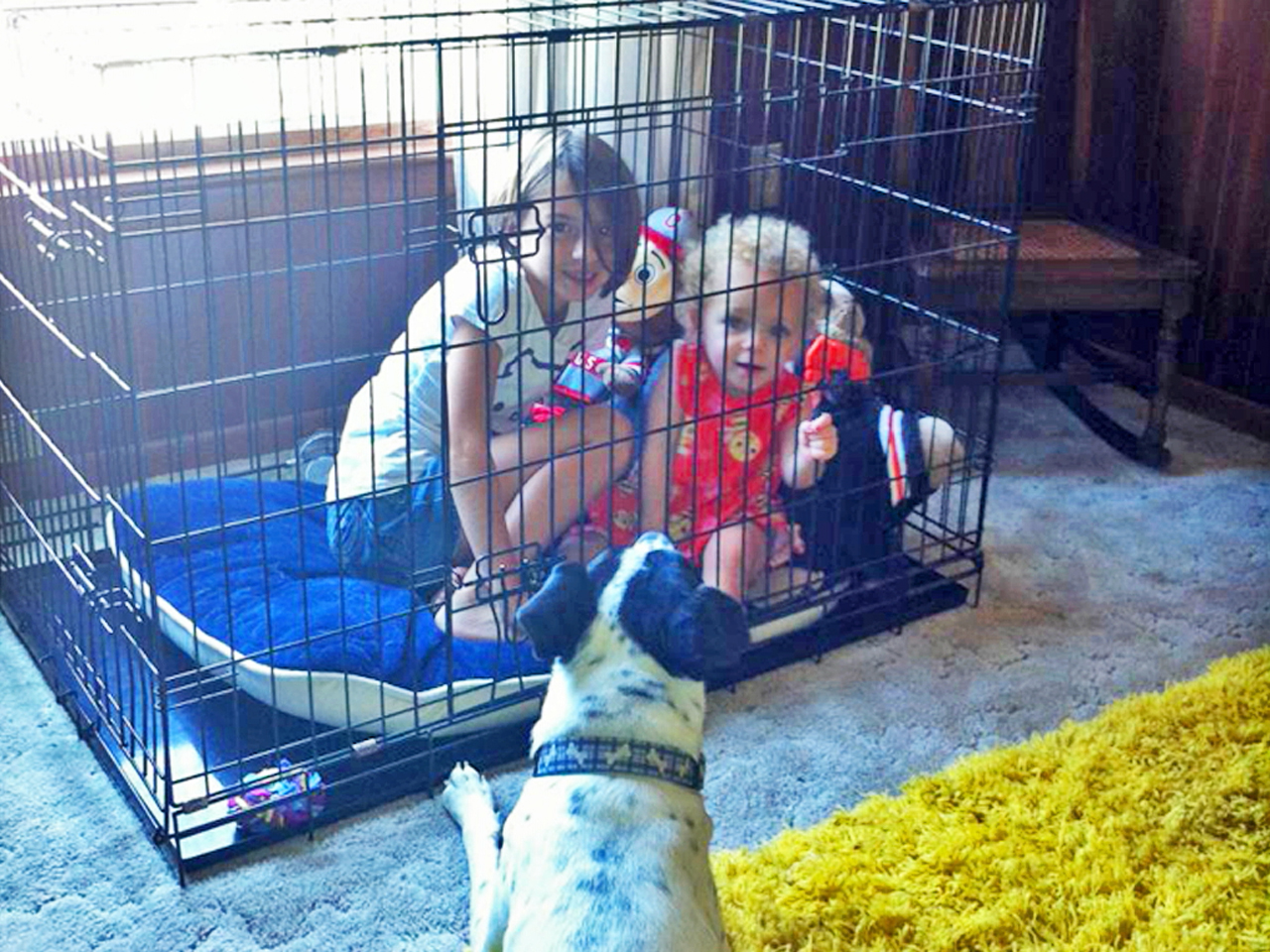
Then my eyes froze on Bruno’s cage—the one we use only when our overexcited dog needs calming during visitors. But this time, Bruno wasn’t inside.
It was Ellie. My daughter.
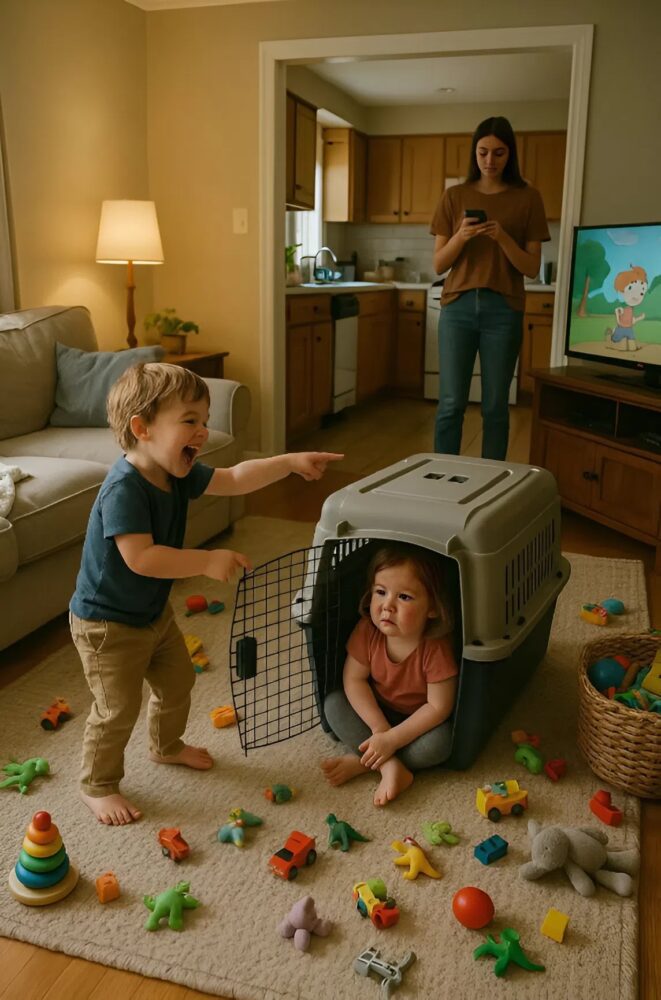
She was sitting cross-legged, like in a pretend fort, but her swollen eyes and red cheeks told another story—she had been crying. Beside the cage, barefoot and frozen, stood her twin brother.
Shocked, I couldn’t move. My voice finally broke the silence:
“What is going on here?”
Anna, glued to her phone, barely lifted her eyes. With chilling calmness, she answered as if nothing was wrong:
“They’re just playing zoo. She wanted to be the tiger.”
Ellie’s trembling voice pierced through me:
“She locked the door, Mommy… I said I didn’t want to play anymore.”
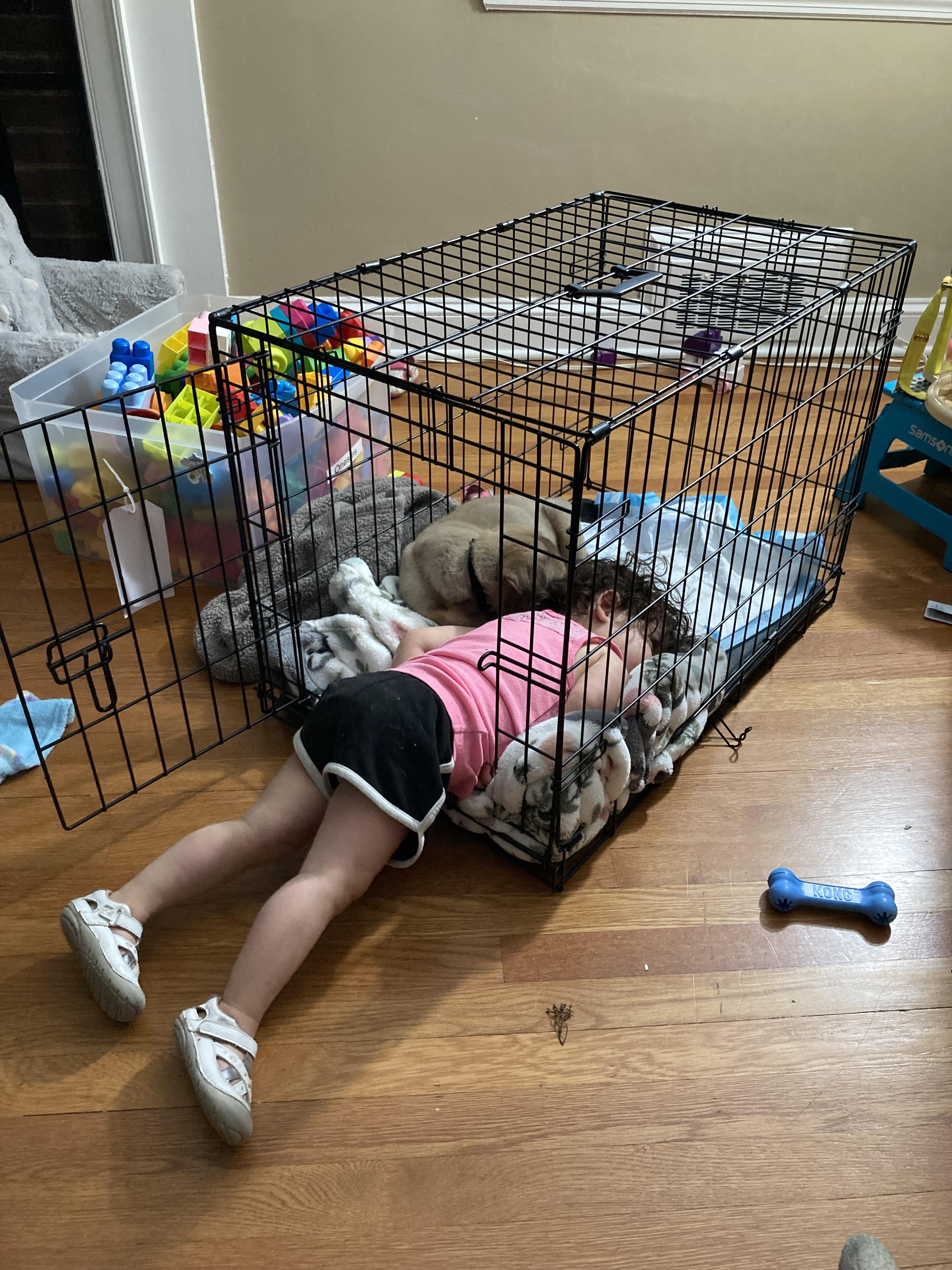
My heart dropped. This wasn’t play. This was negligence—cruel, careless, and dangerous.
I turned to Anna, my voice shaking with anger:
“Do you seriously think this is okay?”
She shrugged. “It’s just a game. Kids love pretending.”
No guilt. No remorse. Only indifference.
I bent down, pulled Ellie into my arms, and whispered, “Sweetheart, this isn’t a game. You should never, ever feel this way.”
Then I stood up, my fury cold and sharp.
“Leave. I don’t ever want to see you again.”
Without a word, Anna stuffed her phone into her bag, grabbed her purse, and walked out.


