
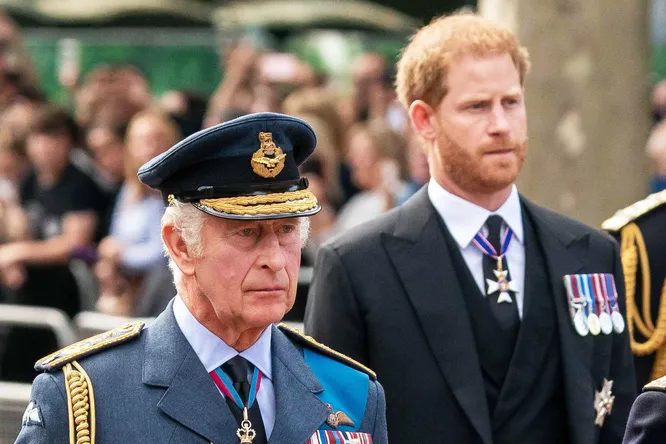
Royal funerals are planned well in advance — and King Charles III is already laying out details for his own under the code name “Operation London Bridge.” He hopes that his younger son, Prince Harry, will take part in the proceedings alongside his family. Since stepping back from royal duties, Harry has been living in Montecito, California, with Meghan Markle and their two children — 6-year-old Archie and 4-year-old Lilibet. The King has expressed his wish for the estranged prince to return to the UK for the mourning period.
When the time eventually comes, the monarch is said to be firm in his desire for Harry to take his rightful place at the heart of the royal family, in full view of the public. The Duke of Sussex is expected to walk side by side with his older brother, Prince William, who will be proclaimed the new King following their father’s death. The sons of Princess Diana will lead the somber procession through the streets of central London.

The Duke and Duchess of Sussex will be invited to attend the family vigil during the farewell ceremony at Westminster Hall and will play a significant role in the funeral service alongside senior royal family members. Arrangements are being made for Prince Archie and Princess Lilibet, the King’s youngest grandchildren, to be present at the memorial service in Westminster Abbey and the burial at St. George’s Chapel in Windsor. Harry and Meghan are expected to be involved not only in the public ceremonies but also in behind-the-scenes briefings and rehearsals.
Most aspects of the state funeral will follow the model set during Queen Elizabeth II’s funeral. However, King Charles III has introduced a few changes to reflect his personal values. His long-standing commitment to environmental protection will be honored through the use of eco-friendly materials wherever possible. The period of royal mourning will be shortened to match the length of national mourning — beginning with the monarch’s death and lasting 10 or 11 days until the funeral.

When Queen Elizabeth II passed away in September 2022, the royal mourning period lasted an extra week beyond the funeral. As always, the detailed funeral plans account for various scenarios, including where the King might pass away and how his coffin would be transported from each royal residence to Buckingham Palace.
King Charles was diagnosed with cancer in February last year and continues to undergo weekly treatment. Despite his health challenges, he remains active in his royal duties and continues to plan future engagements. Buckingham Palace has stated that the funeral plans are not yet finalized.
Prince Harry has previously expressed concerns about bringing Meghan and their children back to the UK, citing the loss of their government-provided security following “Megxit.” However, in the event of a royal funeral, the entire family would automatically receive full police protection.


