
When I moved to a waterfront property, everything seemed perfect: nature, fresh air, peace. I enjoyed setting up the garden, tending the beds, and soaking in the quiet and lake views.
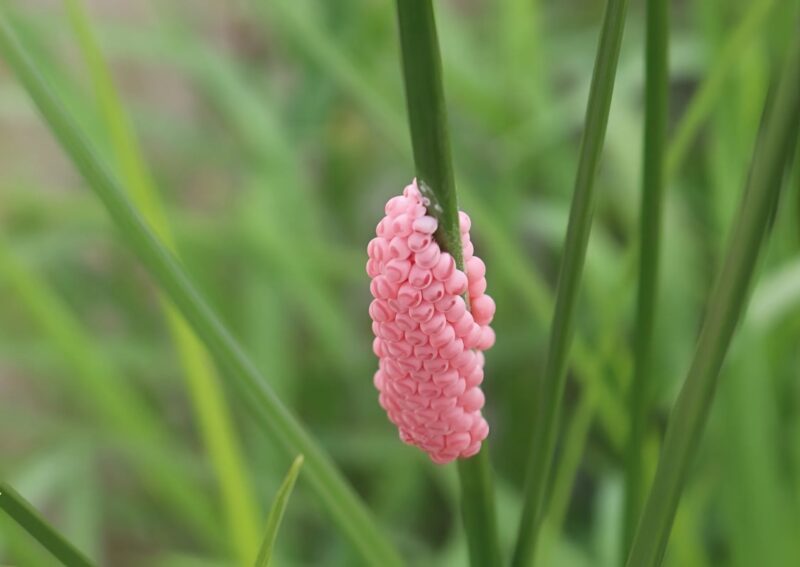
But one day, I noticed strange bright pink clusters on the wall of the shed by the water. They looked like tiny beads, almost like a toy mosaic.
At first, I didn’t pay much attention — I thought maybe it was some unusual but harmless natural feature. But a few days later, similar clusters appeared on the plants along the shore.

That’s when I started to feel uneasy and decided to find out what they were. A quick internet search gave an unexpected answer: these were eggs of apple snails — an invasive species originally from South America.
It turned out these snails pose a serious threat. They reproduce rapidly in moist environments, especially in warm climates, and each clutch can contain up to 600 eggs.

These creatures quickly destroy aquatic plants, disrupt the ecosystem, and push out native wildlife. The bright pink color of the eggs isn’t just a weird trait — it’s a warning: they contain toxins that deter predators.
I realized I couldn’t waste a moment. I put on gloves, carefully collected all the eggs I found, and sealed them tightly. Then I contacted environmental protection services.
Experts arrived quickly, inspected the area, and confirmed that apple snails had indeed started breeding nearby — most likely because someone released decorative snails into the pond without knowing the consequences.
Thanks to the swift response, the spread was stopped. But now every spring I carefully check the shore and walls near the water. And I tell everyone one thing:
If you see these tiny pink eggs — don’t be happy. It’s not beauty. It’s a danger sign.


