
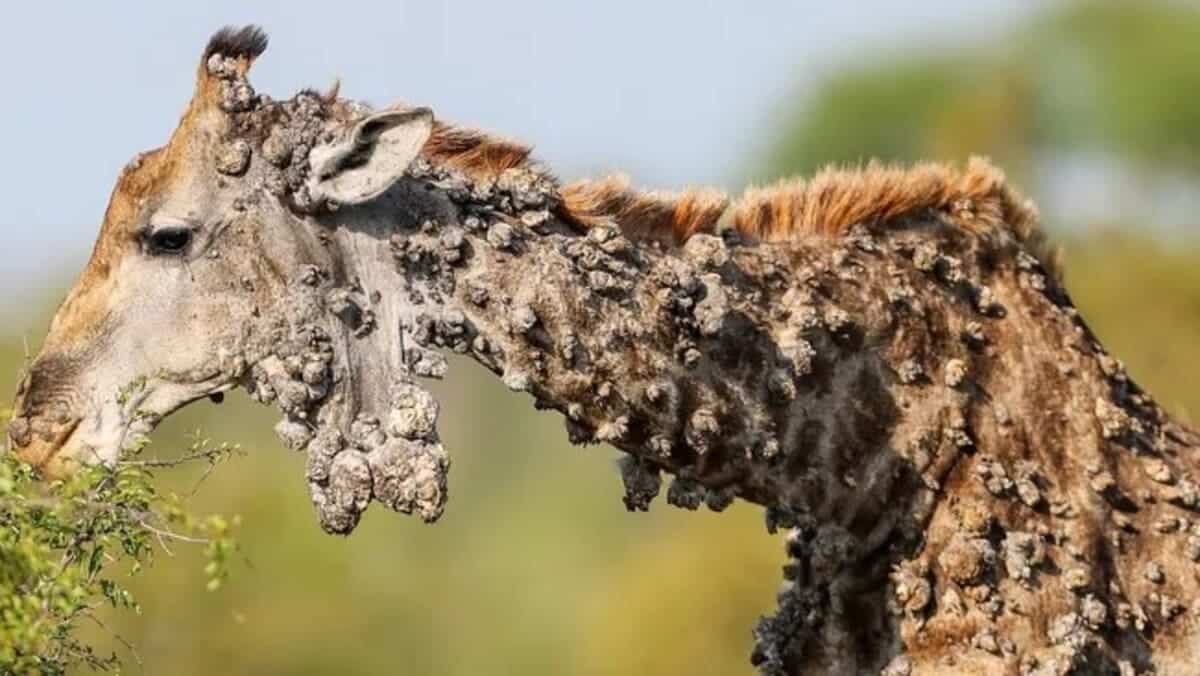
While many couples celebrate their 40th anniversary with a cruise or a beach vacation, South African duo Marius and Michelle Nortje prefer the wild outdoors.
Their love, spanning four decades, took an unforgettable turn during a trip deep inside Kruger National Park.
What began as a typical safari drive quickly transformed into a moment neither the couple nor the online world would soon forget.
“We visit at least once a year, sometimes even up to four times,” Marius shared in an interview.
But on their anniversary trip last December, something remarkable appeared from the bush — a group of three giraffes, one of which was unlike anything Marius, an experienced wildlife photographer, had ever encountered.
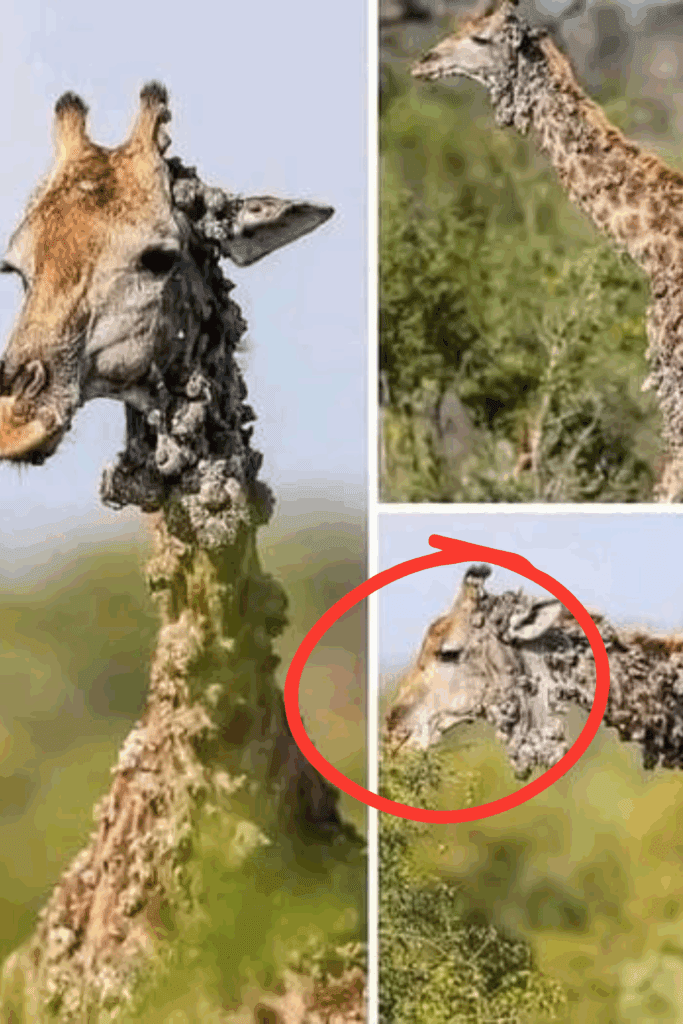
“We couldn’t spot the lions along the paved road, so we turned onto a gravel path and saw one giraffe, then two, emerging from the bush. When the third came into view, we noticed unusual growths all over her body,” he recalled.
Quickly, Marius snapped photos of the giraffe and posted them on Facebook, where they sparked both fascination and concern.
“Many people wondered if she was in pain,” he said. “But she was calmly grazing, seemingly unbothered, though the growths looked painful.”
He tagged South African National Parks (SANParks) to raise awareness, but as of the interview, hadn’t received a response.
A Rare Condition
The images gained wider attention after being shared by WorldWide Vets, an international animal welfare group. Dr. Gemna Campling, the organization’s founder and director, explained that the giraffe is suffering from a papillomavirus-related condition.
“There are different types of papillomavirus that affect specific species. In this case, it’s likely Bovine Papillomavirus (BPV),” Dr. Campling said.
The virus is transmitted through direct contact, probably by oxpecker birds that land on giraffes to feed on parasites.
“It’s believed these birds spread the virus by moving from one animal to another. In this herd, only this one giraffe shows symptoms, just like in previous cases,” she added.

Though alarming in appearance, the condition isn’t fatal.
“Many BPV cases resolve on their own, with animals fully recovering,” Dr. Campling said. “There’s no treatment for this in giraffes, but wildlife vets keep a close watch. Fortunately, this virus isn’t transmissible to humans, although humans can get their own type of papillomavirus.”
Still, Dr. Campling noted, “While not life-threatening, advanced lumps can cause discomfort.”
It’s difficult to know exactly how much pain the giraffe experiences, but it’s heartbreaking to imagine her living with the condition. Despite the visible growths, she continued to graze peacefully — seemingly unaffected.
The photos touched countless hearts online, inspiring empathy, awe, and curiosity from thousands.
For Marius and Michelle, the experience was a poignant reminder of why they keep returning to the wild.
Sometimes, the most unforgettable moments happen when least expected. And sometimes, it takes the eye of a passionate nature lover to show the world how both resilient and fragile wildlife truly is.


