
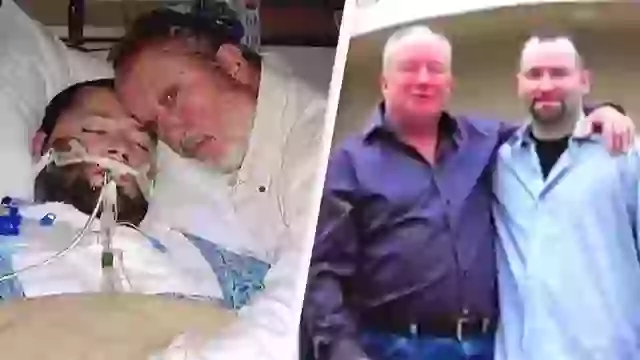
A father fought to save his son’s life after doctors mistakenly declared him brain dead, leading to a dramatic standoff with a SWAT team.
In January 2015, George Pickering II entered Tomball Regional Medical Center armed with a gun, refusing to leave as he desperately tried to prevent the hospital from withdrawing life support from his son.

His son, George Pickering III, had suffered a massive stroke and was placed in critical care on life support. He had a history of seizures, but this time, doctors believed his condition was irreversible.
“They told me he was brain dead, a vegetable,” Pickering later told Click 2 Houston. “They were moving too fast—the hospital, the nurses, the doctors.”

The hospital had begun a process called “terminal weaning,” which involves gradually removing a patient from life support. Additionally, an organ donation organization had been notified of George’s status, suggesting they believed he would not recover.
On the day of the standoff, hospital staff alerted law enforcement, reporting that Pickering appeared intoxicated and aggressive.
Although his actions seemed extreme, Pickering had a plan: “I knew if I had three or four hours, I would be able to tell if George was really brain dead.”
During the tense confrontation, Pickering pulled a curtain around his son’s bed and refused to leave. In those crucial hours, he noticed small signs of life.
“George squeezed my hand three or four times on command,” he recalled.
Eventually, authorities used a robotic device to pull back the curtain, leading to Pickering’s surrender. Despite spending 11 months in jail, his actions ultimately saved his son’s life.
George Pickering III went on to make a full recovery. Reflecting on the ordeal, he said, “The important thing is I’m alive and well, my father is home, and we’re together again.”
Tomball Regional Medical Center later issued a statement emphasizing that physicians make medical decisions based on expertise, but that substitute decision-makers have the right to accept or refuse treatment—though such choices must be made without endangering others.
Due to privacy laws, the hospital declined to discuss the specific case, instead directing inquiries to law enforcement for more details.


