
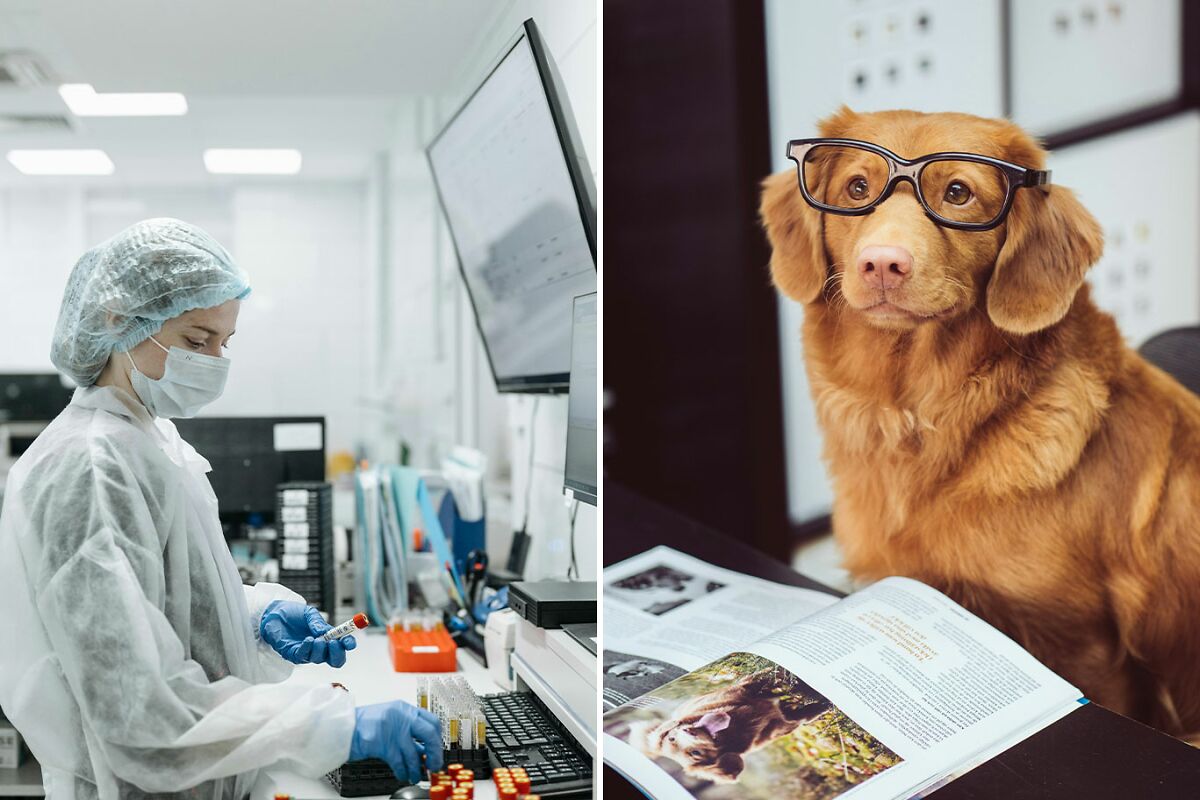
Scientists have found that dogs may be entering a new phase of domestication, as modern humans increasingly seek pets that are calmer and more friendly.
A few decades ago, dogs were primarily valued for tasks like hunting, herding livestock, and providing protection. Today, however, dogs may be evolving to fit into the more sedentary, urban lifestyle of humans, becoming better suited for city living.
A study revealed that oxytocin, often referred to as the “love hormone,” plays a key role in driving dogs to seek affection and interaction with their owners. As humans become more fond of affectionate pets, dogs are becoming increasingly sensitive to this hormone.

Researchers from Sweden’s Linköping University, led by canine experts Brian Hare and Vanessa Woods, explored how dogs developed their unique ability to work with humans and how modern lifestyles might be influencing their traits. In one experiment, 60 golden retrievers were given a seemingly impossible task: opening a treat jar. The dogs were tested twice—once after receiving an oxytocin nasal spray and once with a neutral saline spray. The study found that dogs with a specific genetic variant of the oxytocin receptor were more likely to seek help from their owners after receiving the oxytocin spray.

This experiment confirmed that oxytocin levels significantly impact a dog’s social behaviors and relationship with humans. The results also showed that a dog’s sensitivity to social interactions is partially driven by its genetics.
Service dogs, specially trained to assist their owners, also exemplify this evolution. Unlike most pet dogs, service dogs are naturally drawn to strangers, even as puppies. According to Woods and Hare, this increasing friendliness has altered the biology of dogs, much like the changes that occurred thousands of years ago when wild wolves began adapting to human settlements. Over time, these wolves became attracted to humans rather than fearful or aggressive.

The second wave of domestication occurred after the Industrial Revolution when rising disposable income led people to breed dogs for specific physical traits, reflecting their social status. This period gave rise to many of the 200 dog breeds recognized today by the American Kennel Club.


