
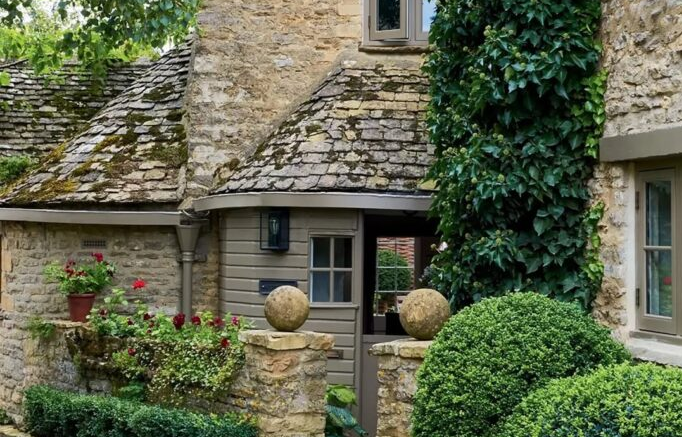
How the English live in old 17th century houses  . I show what’s inside – poverty or chic.
Interior photos in the first comment

This beautiful house is located in a tiny village called Little Faringdon, where only 63 people live. And among them is James Mackie, a businessman well known in narrow circles. He once held high positions in auction houses (including heading Sotheby’s), and now enjoys life in rural England, collecting vintage and giving advice on interior design.
The 17th-century house where Mackie lives is perhaps the best illustration of his refined taste. Rare antiques here blend beautifully with whitewashed wooden beams and rustic curtains. However, most of the things in this old house are vintage. James, due to his job and personal hobby, has collected antiques almost all his life.
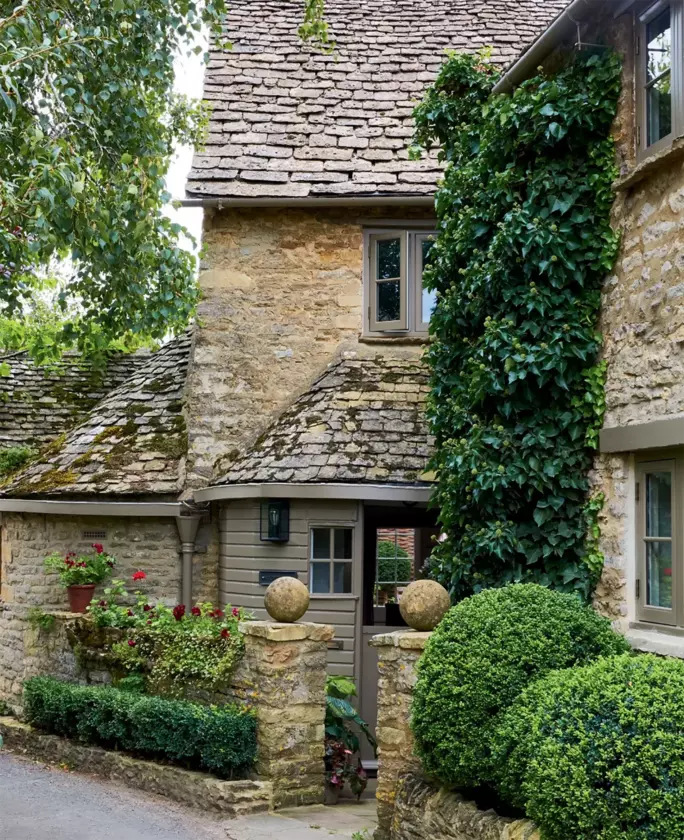
James bought this house in 2016 and it took 10 months to renovate, remodel and rebuild.
Now he lives in this house all year round. Although he initially bought it as a country house – to come here on weekends and relax from the frantic pace of the big city (James lived in London for almost 20 years). But the rural life charmed him so much that he decided to move here permanently.
Since 2020, after leaving his job at an auction house and subsequently moving to the countryside, James Mackie has been working remotely as an interior designer. It could be said that it was the purchase of a period house that opened up new career prospects for him.
Let’s see how a lonely Englishman lives in a picturesque village? And what did he turn a 17th century house into?

The walls of the house are covered with black and white etchings, lithographs and paintings that James Mackie has been collecting since the 1990s. In the photo are engravings by an unknown author and that same luxurious mahogany bureau. It’s hard to believe that it’s more than two hundred years old.

This is what the other part of the living room looks like. The sitting area has a 1920s sofa (James chose the upholstery fabric himself) and a cozy home library, which contains many books on design, architecture and British history.

From the living room you can enter another room that serves the same function. Here James relaxes, reads books, drinks morning coffee at an 18th-century table with a folding top. And note how stylish the bright blue sofa looks against the whitewashed walls.

The house may look big from the outside, but there’s not much space inside. So every square metre is used for something. For example, this nook is dedicated to a home bar (James loves to entertain). The curtains are made from Bennison fabric – this British company specialises in hand-printed fabrics based on English and French fabrics from the 18th and 19th centuries.

The house is small, but there is room for a small dining room next to the kitchen. It has an oak table and chairs from the 18th century.

And here is the kitchen itself. The set is old, but very ordinary, inexpensive. It was painted in a grass color from Farrow & Ball.

The original 17th century stone staircase leads to the second floor. It is hard to imagine how many people have climbed it to their bedrooms over the years…

Upstairs is a bedroom, dressing room and bathroom. The master bedroom (there is also a small guest room) features an antique bedspread that is over a century old, as well as tone-on-tone curtains and carpet.

Next to the bedroom is a bathroom with a large window (unfortunately, it is almost not visible in the photo). The interior uses “Knurl” wallpaper by Howe.

And this is the guest bedroom, where guests from London and other cities stay. Once (under the previous owner) this room was an ordinary storeroom. To decorate the bedroom, James used wallpaper from the legendary Morris & Co.


