

In the winter of 1943, tragedy engulfed the Lviv ghetto — a place consumed by hunger, disease, and fear. Amid this darkness, one unknown Jewish woman made a choice that would echo through time. It wasn’t a decision for herself, but an act of love to save her child’s life.
Her action, born of despair yet shining with courage, would later be remembered as one of the most powerful and humble expressions of a mother’s devotion.
Life inside the ghetto had become unbearable. Food supplies were gone, deportations were constant, and every sunrise brought another train leading to death camps. For parents, keeping their children alive seemed impossible — the world around them had conspired to erase their existence.
But this mother found a fragile thread of hope.

She contacted a group of Polish sewer workers — ordinary men who risked their lives to help Jewish families move beneath the city through narrow, foul tunnels. Though suffocating and cold, those tunnels offered something priceless — a chance at survival.
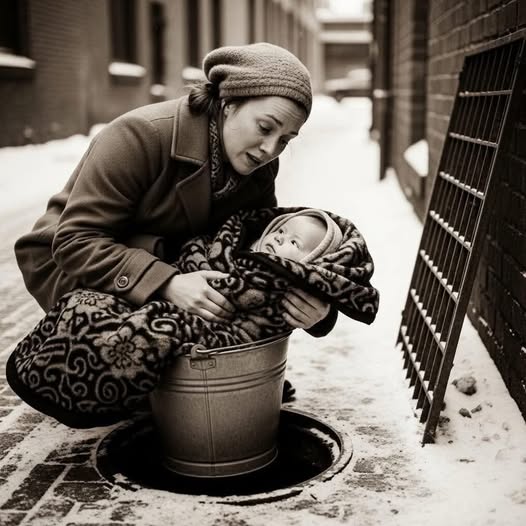
One freezing night, when the cold split the stones, the mother wrapped her infant in a thin shawl — the only warmth she had left — and gently placed him inside a metal bucket. Her hands trembled, not from the frost, but from the weight of the moment.
Lowering her baby into the darkness of the sewer shaft, she whispered her last words to him:
“Grow where I cannot.”
Then she stayed behind, knowing exactly what that meant. She accepted her fate — to give her child a future.
The sewer worker waiting below took the bucket from the shadows, holding the baby close despite the stench and filth, and carried him through the labyrinth beneath Lviv toward a fragile hope of freedom.
The child survived.
No one ever learned the woman’s name.
There is no photograph of her face, no grave to kneel beside in gratitude. Her story faded into the silence of history — but her act of love lived on in the heart of the boy she saved.
He grew up, endured the war, built a life, and grew old — a living testament to her final act of courage.
Decades later, he returned to Lviv. Standing by the rusted sewer cover — the very place where his life had begun — he laid a single red rose and whispered,
“This was my beginning.”
The woman who gave everything so her son could live may remain nameless, but her love does not need a name to be eternal.
Though her story nearly vanished, it continues to echo through generations — a reminder that even in the darkest times, love can find a way to save, to endure, and to bring light where none should exist.
The boy in the bucket was not just a survivor —
he became a living symbol of courage, sacrifice, and hope.
Returning to the place where her story ended and his began, he ensured her love would never be forgotten.
Some acts of bravery are carved into monuments.
Others live quietly — in memories, whispers, and the lives they touched.
This was hers.
A timeless story of a mother’s love — one that outlived war, death, and despair — reminding the world that even in humanity’s darkest hour, compassion can still bloom. 💔🌹